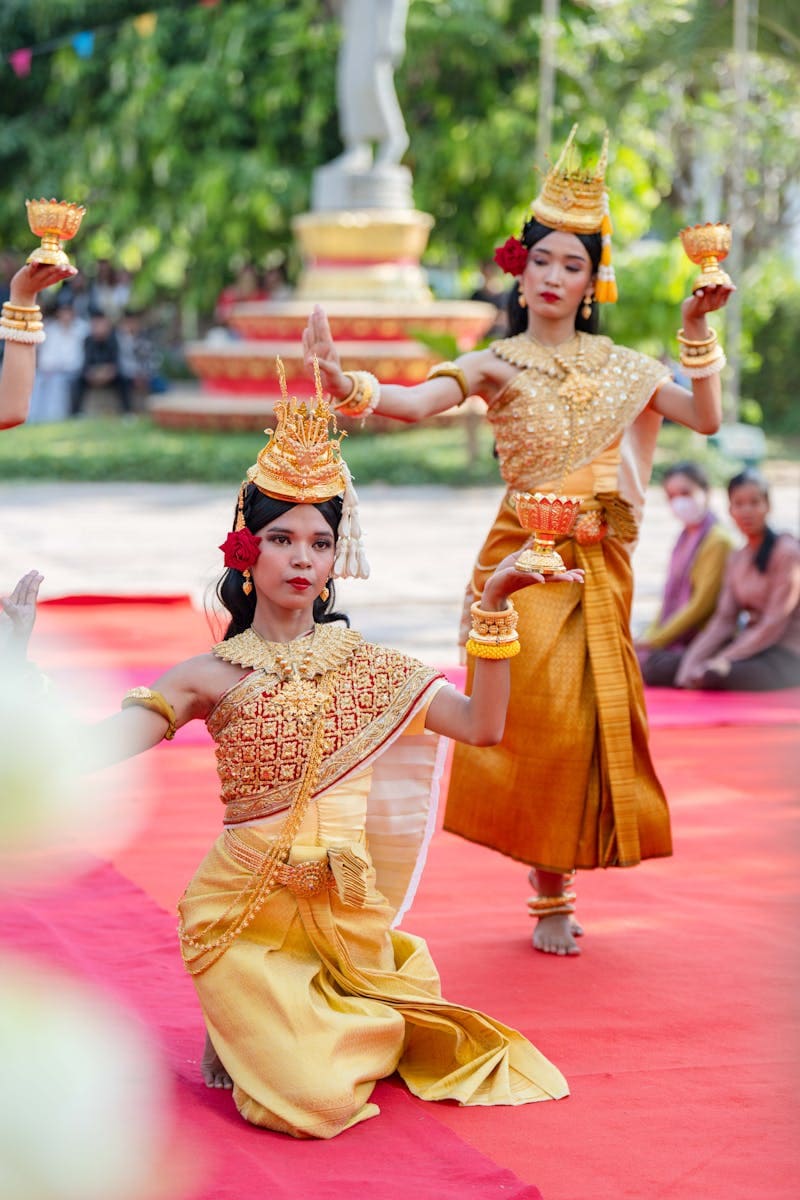
Cambodian culture blends centuries-old Khmer tradition with a strong sense of hospitality, and a little cultural awareness goes a long way toward a warm, respectful visit.
Greetings and respect
The traditional greeting, the sampeah, involves pressing your palms together at chest or face height with a slight bow — the higher the hands, the greater the respect shown, traditionally reserved for monks and elders. A smile and a slight nod are always well received from visitors, even without a perfect sampeah.
Dress and behaviour at temples
Shoulders and knees should be covered when visiting pagodas and temple complexes, and shoes are removed before entering most religious buildings. Public displays of anger or raising your voice are considered a loss of face for everyone involved — a calm, patient manner is always the better approach.
Apsara dance and the arts
Apsara dance, with its intricate hand gestures and gilded costumes, is one of Cambodia's most treasured art forms, rooted in the mythology carved into Angkor's temple walls. Evening performances are widely available in Siem Reap and make a beautiful cultural counterpart to a day of temple exploring.
Festivals worth knowing
Khmer New Year (mid-April), Pchum Ben — a time to honour ancestors — and the Water Festival on the Tonle Sap in November are the three biggest events on the Cambodian calendar, each transforming towns and villages with music, food stalls, and celebration.
Our guides are always happy to explain the customs you'll encounter along the way, so nothing gets lost in translation.